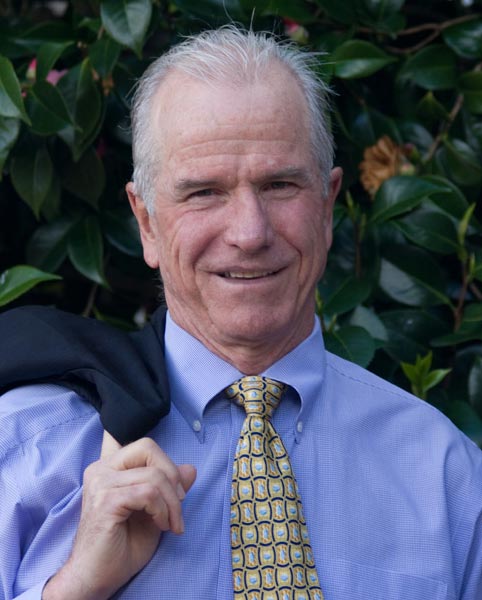
ABOUT LANCE MASON
The Author – and The Story
Lance Mason was born post-WWII in coastal Ventura County, California, a region colonized two centuries before by Spain through its hold on the California territory. Eventually the area’s farmlands came into the possession of immigrant German, Irish, and a few Italian families, and was continually worked by them and resident or transient Mexicano and Chicano farm laborers. The children of these landowners and laborers were the author’s classmates throughout his youth, and he picked lemons, hoed the fields, and packed frozen lima beans alongside them and their families. When university called, Mason pursued a career of healthcare, teaching, and travel, and then writing, but he’s carried fragments of this story with him through the decades.
AWARDS AND HONOURS
20th Annual Solas Awards, 2026 – Gold, Men’s Travel, “Chasing Buffalo”
20th Annual Solas Awards, 2026 – Silver, Most Unforgettable Character, “Up Close…”
20th Annual Solas Awards, 2026 – Bronze, Adventure Travel -- LZ
Fish Publishing’s 2025 Memoir Prize
19th Annual Solas Awards, 2025, Men’s Adventure Gold (Tango)
18th Annual Solas Awards, 2024, Grand Prize Silver (Drnc)
18th Annual Solas Awards, 2024, Men’s Adventure Gold (Rugby)
“In the Eye of the Ox” shortlisted for The Masters Review Reprint Prize, 2023
15th Annual Solas Awards, 2021, Bronze: Adventure Travel
15th Annual Solas Awards, 2021, Bronze: Food & Travel
Lunate 500 Competition 2020: 2nd place
Shortlisted, Fish Publishing Prize, 2020
13th Annual Solas Awards, 2019: Silver Medal, Men’s Travel (Under Siege)
2018 Sheridan Anderson Short Story Contest, 2nd Place
Tucson Festival of Books, 2017, finalist, nonfiction
Writing Scholarship 2016, VCFA Post-grad Writers Conference
Editor’s Choice, Traveler’s Tales, 2016
10th Annual Solas Awards, 2016:
- Gold Medal: Men’s Adventure
- Gold Medal: Sea Stories
- Silver Medal, Most Memorable Character
- Grand Prize, Third Overall
2014 Lecture UCSB College of Creative Studies
2014 Pushcart Nomination: review of Kofi Awoonor’s The Promise of Hope
Tom Howard Non-fiction Contest H.M. (2010; travel memoir)
New Millennium Writings Non-fiction Contest (2009; memoir)
Margaret Reid Poetry Contest award (2009)
Tom Howard, Poetry Contest award (2007)
Why, How, And for Whom
What a novel’s characters and narrative have to say, in my opinion, should reflect what the writer has to say, and how he/she uses the story to say it; in this case, “Change was coming.”
Basic human virtue changes very little, and the same, regrettably, is true for human evil. Without being maudlin, I believe the novel usefully explores some of society’s pitfalls we haven't solved: racism, fear-driven social conviction and behavior, political and economic disparity, and an increase in police misconduct, while showing some of the heart and unspoiled soul of teen innocence in the cauldron of change that was California at the birth of the Sixties.
The story is set in 1963, when I was sixteen, impressionable at an impressionable time for America. Oxnard, my hometown, mirrored the forces that were on a collision course nationally. George Wallace, Medgar Evers, Bull Connor, MLK's “Dream” speech, church bombings, JFK in Dallas—culminations and precursors for conflict and revolution to come. Muhammad Ali, Bob Dylan, and Malcolm X were on the move. By baptism of fire, new Civil Rights laws would pass the next spring. That national zeitgeist is the canvas for Chuy Muro.
Oxnard’s nickname, El Chiquez, meant Little Chicago, a small-time crime nexus in the 1920s-50s. Stories of bootleg booze, black-market drugs, and illegal immigration gave it a legendary rep as a dangerous place, vs. California's "Peace & Love" image c. 1967. Still, it was home to a prominent farming economy and an influential force in state politics—but, indeed, change was coming.
Begun in 1942, the federal Bracero Program, a supply of cheap Mexican farm labor for the Southwest, was ending in 1963, with workers offered US residency, meaning broad, unknown changes to the towns where they would settle. This moving horizon caused uncertainty, but especially in Oxnard and its farming identity. It promised friction and disruption of long-held views on social roles, ethnicity, and economic status. No one knew what was coming next, and doubt begets unrest. Leveraged on these fears, a series of Anglo-Latino clashes flared up in Oxnard, often violent, but regrettably consistent with the times. The Cain-and Abel narrative pivots on these and their impact on Eddie and Gene, the central relationship in the story. *
The audience for Chuy Muro? My over-ripe ego is prodding me: "America! Say you wrote it for America!" but, more tangibly, I wrote it for people who can be moved by a universal story. I think good fiction reveals universal human traits, portraying them in authentic times and places, in the minds and mouths of characters who convey intensity and an integrity to the story being told. I tried to do that in Chuy Muro, and I hope it reflects the true trend of events, fears, and secrets in this chapter of America’s youth.
* The LA Dodgers, “our” West Coast team, would sweep the Yankees 4-0 in the 1963 World Series. This should have been a source of unending pride for Sandy Koufax fans Eddie and Gene, but the tide of the story washed this joy out of their reach.